Vertex AI is now Gemini Enterprise Agent Platform! We are currently updating our content to reflect this change. Please bear with us if you encounter naming inconsistencies during this transition.
Punkty kontrolne
Load data from Cloud Storage into BigQuery
Sprawdź postępy
/ 10
Load data from Cloud Storage into BigQuery
Sprawdź postępy
/ 10
Ten moduł może zawierać narzędzia AI, które ułatwią Ci naukę.
Overview
In this lab, you load a web server log into a BigQuery table. After loading the data, you query it using the BigQuery web user interface and the BigQuery CLI.
BigQuery helps you perform interactive analysis of petabyte-scale databases, and it enables near-real time analysis of massive datasets. It offers a familiar SQL 2011 query language and functions.
Data stored in BigQuery is highly durable. Google stores your data in a replicated manner by default and at no additional charge for replicas. With BigQuery, you pay only for the resources you use. Data storage in BigQuery is inexpensive. Queries incur charges based on the amount of data they process: when you submit a query, you pay for the compute nodes only for the duration of that query. You don't have to pay to keep a compute cluster up and running.
Using BigQuery involves interacting with a number of Google Cloud resources, including projects (covered elsewhere in this course), datasets, tables, and jobs. This lab introduces you to some of these resources, and this brief introduction summarizes their role in interacting with BigQuery.
Datasets: A dataset is a grouping mechanism that holds zero or more tables. A dataset is the lowest level unit of access control. Datasets are owned by GCP projects. Each dataset can be shared with individual users.
Tables: A table is a row-column structure that contains actual data. Each table has a schema that describes strongly typed columns of values. Each table belongs to a dataset.
Objectives
In this lab, you learn how to perform the following tasks:
Load data from Cloud Storage into BigQuery.
Perform a query on the data in BigQuery.
Task 1. Sign in to the Google Cloud Console
For each lab, you get a new Google Cloud project and set of resources for a fixed time at no cost.
Sign in to Google Skills using an incognito window.
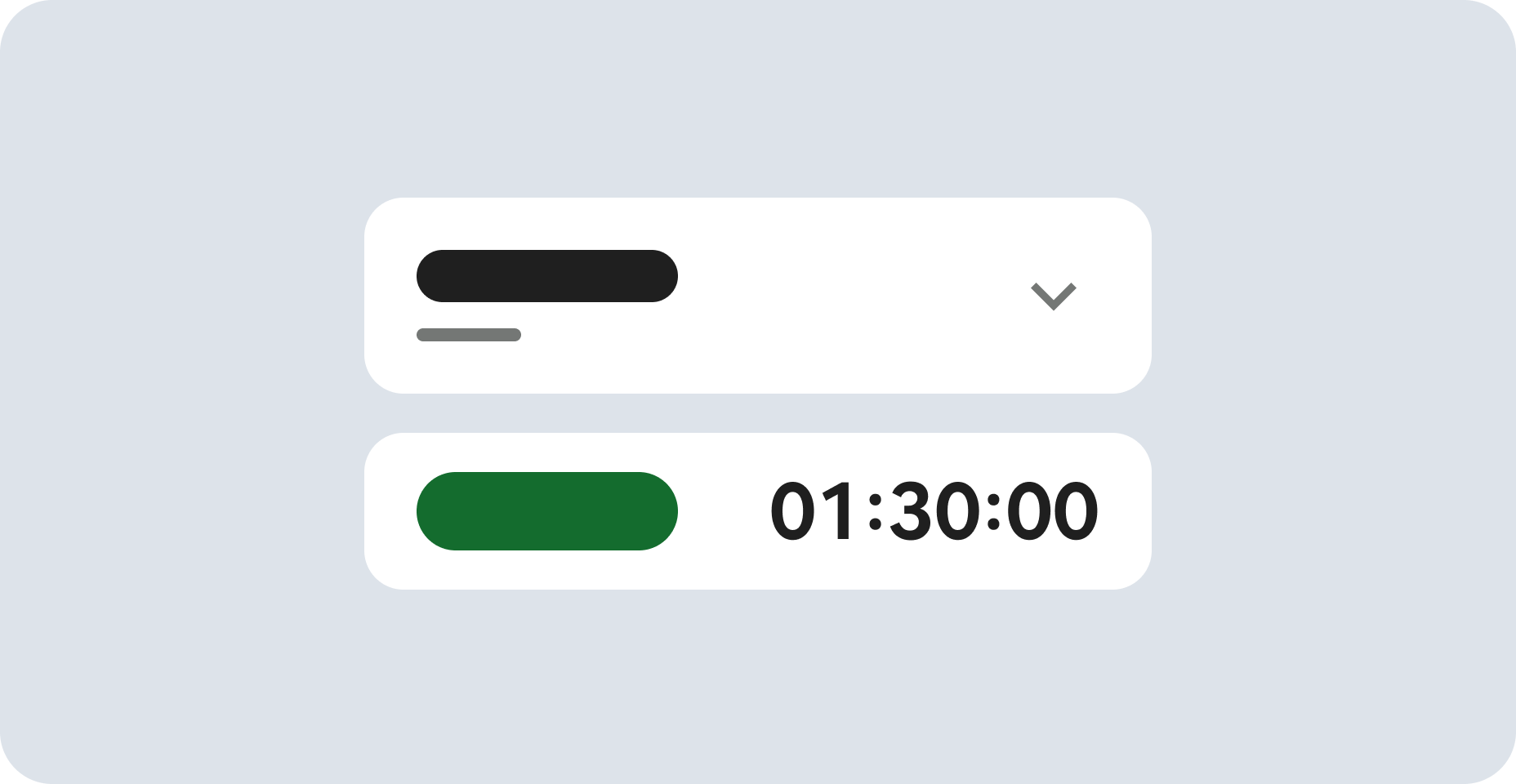
Note the lab's access time (for example, 1:15:00), and make sure you can finish within that time.
There is no pause feature. You can restart if needed, but you have to start at the beginning.
When ready, click Start lab.
Note your lab credentials (Username and Password). You will use them to sign in to the Google Cloud Console.
Click Open Google Console.
Click Use another account and copy/paste credentials for this lab into the prompts.
If you use other credentials, you'll receive errors or incur charges.
Accept the terms and skip the recovery resource page.
Make a note of whether your assigned region is closer to the United States or to Europe.
Task 2. Load data from Cloud Storage into BigQuery
In this task you import external data from a public Cloud Storage bucket directly into BigQuery by creating a new dataset (logdata) and a table (accesslog), using the CSV file format and utilizing BigQuery's auto-detection feature for schema creation.
In the Google Cloud console, in the Navigation menu (), click BigQuery and then click Done.
Create a new dataset within your project by clicking on View actions icon next to your project ID in the Explorer section. Then select Create dataset.
In the Create Dataset dialog, for Dataset ID, type logdata.
For Location type, select US (multiple regions in United States).
Click Create dataset.
Expand your project ID, and click on the View actions icon next to the logdata dataset.
Select Create table.
On the Create Table page, specify the following, and leave the remaining settings as their defaults:
Property
Value
Create table from
Google Cloud Storage
Select file from GCS bucket
cloud-training/gcpfci/access_log.csv
File format
CSV
Destination Dataset name
logdata
Destination Table name
accesslog
Destination Table Type
Native Table
Note: When you have created a table previously, the Create from Previous Job option allows you to quickly use your settings to create similar tables.
Under Schema, select Auto detect.
Accept the remaining default values and click Create table.
BigQuery creates a load job to create the table and upload data into the table (this may take a few seconds).
(Optional) To track job progress, click Job History.
When the load job is complete, click logdata > accesslog.
On the table details page, click Details to view the table properties, and then click Preview to view the table data.
Each row in this table logs a hit on a web server. The first field, string_field_0, is the IP address of the client. The fourth through ninth fields log the day, month, year, hour, minute, and second at which the hit occurred. In this activity, you will learn about the daily pattern of load on this web server.
Click Check my progress to verify the objective.
Load data from Cloud Storage into BigQuery
Task 3. Perform a query on the data using the BigQuery web UI
In this task you use the BigQuery web UI to query the accesslog table you created previously.
In the query EDITOR, type (or copy-and-paste) the following query:
Because you told BigQuery to automatically discover the schema when you load the data, the hour of the day during which each web hit arrived is in a field called int_field_6.
select int64_field_6 as hour, count(*) as hitcount from logdata.accesslog
group by hour
order by hour
Notice that the Query Validator tells you that the query syntax is valid (indicated by the green check mark) and indicates how much data the query will process. The amount of data processed allows you to determine the price of the query using the Google Cloud Pricing Calculator.
Click Run and examine the results. At what time of day is the website busiest? When is it least busy?
Task 4. Perform a query on the data using the bq command
In this task you use the bq command in Cloud Shell to query the accesslog table you created previously.
On the Google Cloud console, click Activate Cloud Shell () then click Continue. If prompted, click Authorize.
At the Cloud Shell prompt, enter this command:
bq query "select string_field_10 as request, count(*) as requestcount from logdata.accesslog group by request order by requestcount desc"
The first time you use the bq command, it caches your Google Cloud credentials, and then asks you to choose your default project. Choose the project that Google Skills assigned you to. Its name will look like qwiklabs-gcp- followed by a hexadecimal number.
The bq command then performs the action requested on its command line. What URL offered by this web server was most popular? Which was least popular?
Congratulations!
In this lab, you loaded data stored in Cloud Storage into a table hosted by Google BigQuery. You then queried the data to discover patterns.
End your lab
When you have completed your lab, click End Lab. Google Skills removes the resources you’ve used and cleans the account for you.
You will be given an opportunity to rate the lab experience. Select the applicable number of stars, type a comment, and then click Submit.
The number of stars indicates the following:
1 star = Very dissatisfied
2 stars = Dissatisfied
3 stars = Neutral
4 stars = Satisfied
5 stars = Very satisfied
You can close the dialog box if you don't want to provide feedback.
For feedback, suggestions, or corrections, please use the Support tab.
Copyright 2026 Google LLC All rights reserved. Google and the Google logo are trademarks of Google LLC. All other company and product names may be trademarks of the respective companies with which they are associated.
Zanim zaczniesz
Moduły tworzą projekt Google Cloud i zasoby na określony czas.
Moduły mają ograniczenie czasowe i nie mają funkcji wstrzymywania. Jeśli zakończysz moduł, musisz go zacząć od początku.
Aby rozpocząć, w lewym górnym rogu ekranu kliknij Rozpocznij moduł.
Użyj przeglądania prywatnego
Skopiuj podaną nazwę użytkownika i hasło do modułu.
Kliknij Otwórz konsolę w trybie prywatnym.
Zaloguj się w konsoli
Zaloguj się z użyciem danych logowania do modułu. Użycie innych danych logowania może spowodować błędy lub naliczanie opłat.
Zaakceptuj warunki i pomiń stronę zasobów przywracania.
Nie klikaj Zakończ moduł, chyba że właśnie został przez Ciebie zakończony lub chcesz go uruchomić ponownie, ponieważ spowoduje to usunięcie wyników i projektu.
Ta treść jest obecnie niedostępna
Kiedy dostępność się zmieni, wyślemy Ci e-maila z powiadomieniem
Świetnie
Kiedy dostępność się zmieni, skontaktujemy się z Tobą e-mailem
Jeden moduł, a potem drugi
Potwierdź, aby zakończyć wszystkie istniejące moduły i rozpocząć ten
Aby uruchomić moduł, użyj przeglądania prywatnego
Najlepszym sposobem na uruchomienie tego laboratorium jest użycie okna incognito lub przeglądania prywatnego. Dzięki temu unikniesz konfliktu między swoim kontem osobistym a kontem do nauki, co mogłoby spowodować naliczanie dodatkowych opłat na koncie osobistym.
In this lab, you load a web server log into a BigQuery table. After loading the data, you query it using the BigQuery web user interface and the BigQuery CLI.
Czas trwania:
Konfiguracja: 0 min
·
Dostęp na 30 min
·
Ukończono w 30 min

 ), click BigQuery and then click Done.
 ) then click Continue. If prompted, click Authorize.